
The True Cost of Luxury Kitchen Joinery in Melbourne — and What Drives the Price
If you've started researching kitchen joinery for a Melbourne home renovation or new build, you've probably noticed that the price range is enormous. A kitchen can cost $15,000 or $150,000 — and from the outside, it can be difficult to understand what accounts for that difference, or where on that spectrum you should be.
This guide is written for homeowners who are planning a premium kitchen and want to understand honestly what drives the cost of high-end joinery — and what they should expect to get at different price points.
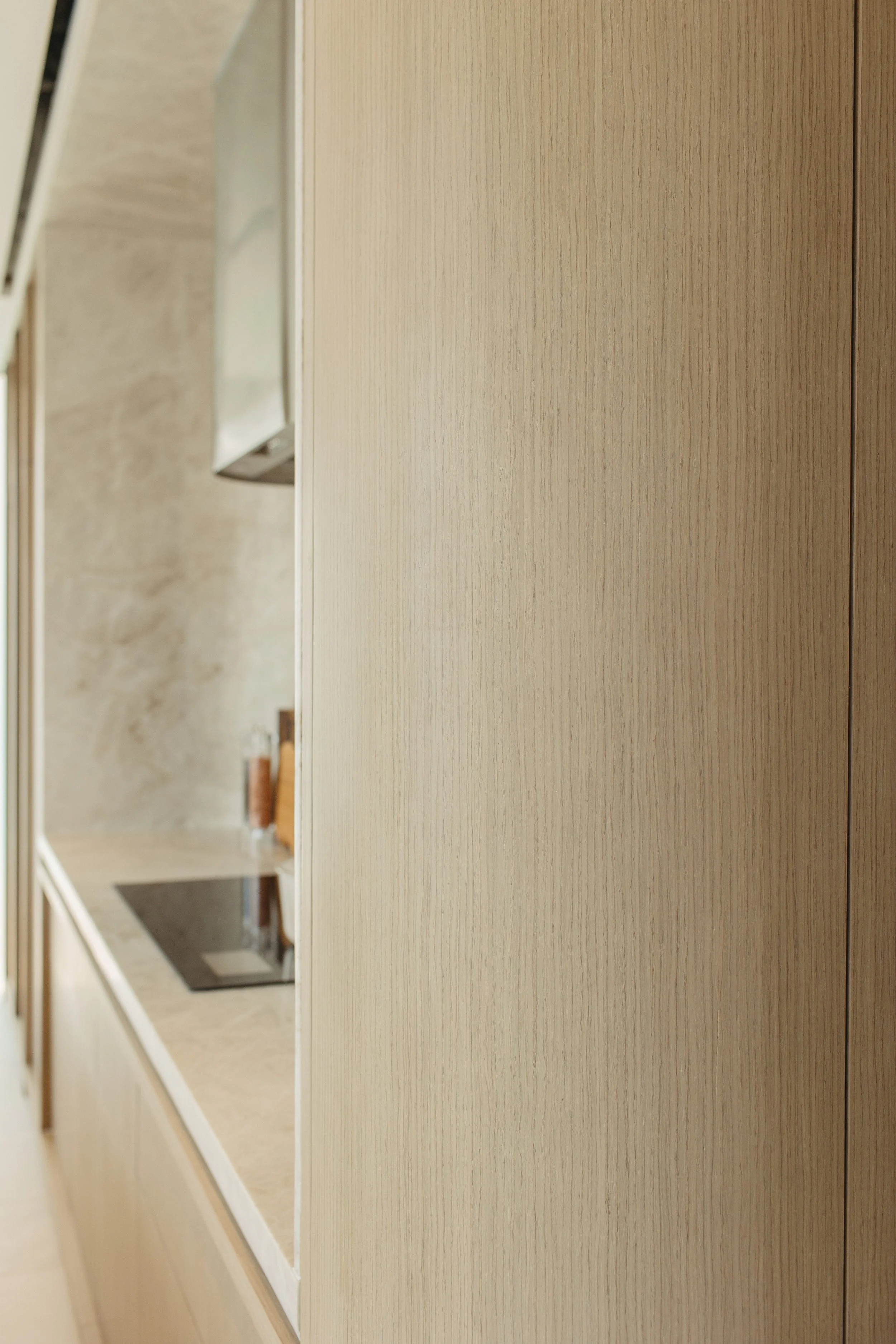
The Rushcutters Display
Why kitchen joinery prices vary so widely
The short answer is that kitchen joinery is not a commodity. Unlike tiling or painting — where labour rates and material costs are relatively standardised — joinery involves a huge range of variables that affect the price independently and in combination: the substrate, the face finish, the hardware, the complexity of the design, the quality of manufacture, and the skill of the installation team.
Two kitchens that look superficially similar in a photograph can have dramatically different costs because of decisions made at each of these levels. Understanding what those decisions are — and what their implications are for the quality and longevity of the result — allows you to spend your budget where it matters most.
What drives the cost of luxury kitchen joinery
The finish
The face finish is the most visible driver of perceived quality and one of the most significant cost variables. A standard laminate door might cost $80–$150 per door. A 2-pac polyurethane door in the same colour will cost $250–$400 per door or more. A real timber veneer door, depending on the species and cut, sits somewhere between — but requires additional consideration around edge treatment and long-term maintenance.
For a kitchen of 20–30 doors and drawers, the difference between laminate and 2-pac alone can represent $5,000–$10,000 in materials and labour costs.
The hardware
Hardware is the most underestimated driver of kitchen quality. Soft-close hinges and drawer runners are standard at every price point, but the quality and precision of the mechanism varies significantly between brands. At the premium end — Blum, Hettich, Grass — the hardware is engineered to a tolerance and longevity standard that is genuinely different from budget alternatives. The drawer that opens with the same smooth, damped action after ten years of use is the one with premium runners.
Handles are a smaller cost item but have an outsized effect on the perceived quality of the finished kitchen. A well-proportioned, properly finished handle in the right material reads as considered and refined. A cheap handle in a slightly wrong finish reads as an afterthought.
The complexity of the design
A kitchen with standard overhead and base cabinets, square edges, and simple door profiles is significantly less expensive to manufacture than one with floor-to-ceiling cabinetry, integrated rangehood panels, fluted or routed door profiles, custom island construction, or integrated appliances behind matching panels.
Each of these details requires additional design time, more complex manufacturing processes, and more skilled installation. They also produce a qualitatively different result — a kitchen that reads as architectural rather than simply functional.
The installation
Premium joinery requires premium installation. The quality of the manufactured product can be undone by poor site work — doors that aren't properly aligned, panels that don't sit flush, hardware that isn't adjusted to run correctly, or scribing to walls and ceilings that leaves visible gaps.
A quality joinery installation team works methodically, adjusts every element on site, and leaves a kitchen that functions as well as it looks. This takes more time than a fast installation — and it costs accordingly.
What to expect at different price points in Melbourne
$25,000–$50,000: A well-designed kitchen in quality laminate with premium hardware. Clean, contemporary, and durable. The right choice for a home where quality is important but the kitchen isn't a signature design statement.
$50,000–$100,000: Access to 2-pac or veneer finishes, more complex design details, higher-specification hardware, and a more considered installation. The kitchen begins to feel architectural — it reads as a designed element of the home rather than a fitted room.
$100,000+: Full bespoke kitchen joinery with the highest quality finishes, fully custom design, integrated everything, and an installation team that treats every millimetre as intentional. This is the kitchen that becomes the reason people buy the house.
What Creador delivers for Melbourne homeowners
At Creador, we work with Melbourne homeowners, architects, and interior designers on bespoke kitchen joinery that is designed and built to a standard we're genuinely proud of. We bring a decade of experience in high-end joinery — refined through working on some of Melbourne's most demanding residential projects — to every home we work on, regardless of scale.
We'll work with you through material selection, design development, and the full installation process — and we'll be with you personally through every step.
Because the kitchen you've always wanted deserves to be built by people who care as much about it as you do.

📩 Contact us to request a joinery proposal or explore our past projects.
Thank you for reading - Digital Marketing Team