
Custom Joinery vs Off-the-Shelf Fit-Outs: The ROI Case for Developers
Every development has a spec-level decision to make: how much of the fit-out is custom, and how much is off-the-shelf. Joinery is usually where this decision has the biggest visible impact, because it's the thing buyers touch, open, and judge finish quality by more than almost anything else in the dwelling. It's also where developers most often ask a fair question: does custom joinery actually pay for itself, or is it just a nicer-sounding line item?
Here's the honest breakdown of where the ROI case for custom joinery holds up — and where it depends on the project.
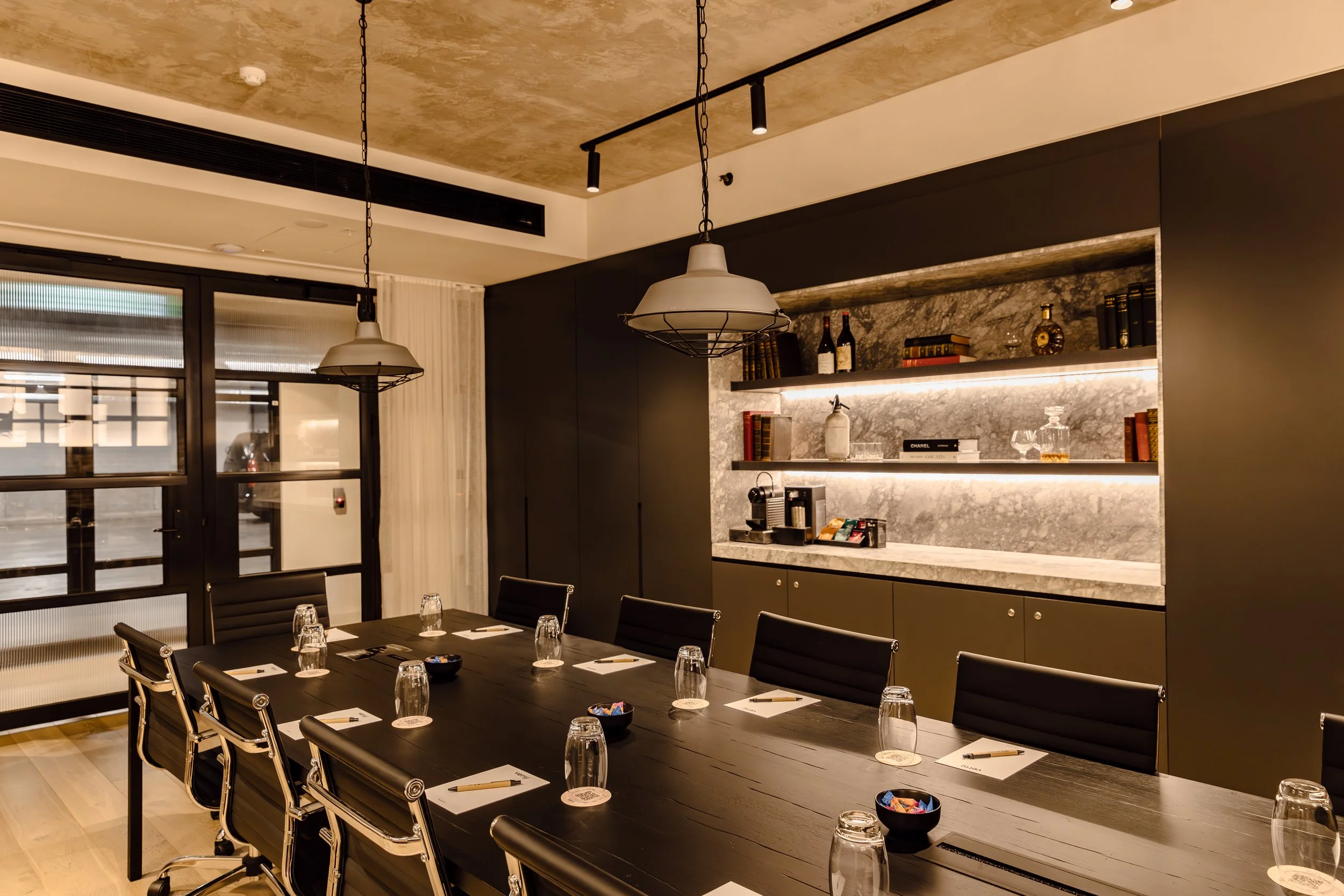
Where Off-the-Shelf Makes Sense
To be direct about it: off-the-shelf or semi-custom joinery isn't automatically the wrong call. For entry-level or high-volume developments where price point is the primary buyer driver, standardised cabinetry from a volume supplier can be the right economic decision. There's no ROI case for premium joinery on a project where the target buyer is optimising for price above all else.
The ROI case for custom joinery is specifically about developments where finish quality is part of what buyers are paying for — luxury, boutique, or premium mid-market projects where the sale price already reflects an expectation of quality throughout.
Where Custom Joinery Earns Its Cost Back
Buyer perception at point of sale. In a competitive market, joinery is one of the fastest ways a buyer forms a judgement about overall build quality — often before they've assessed anything structural or technical. A well-detailed kitchen or wardrobe signals quality throughout the build, even in areas the buyer can't easily inspect. In display suites and open inspections, this is frequently the deciding factor between two otherwise comparable units.
Differentiation in a crowded market. In markets where multiple developments are competing for the same buyer pool at a similar price point, generic finishes make units interchangeable in a buyer's mind. Custom joinery — distinct cabinetry profiles, considered hardware, tailored storage solutions — gives a development a point of difference that's difficult for competitors to match quickly.
Resale and rental value over time. Off-the-shelf joinery tends to show wear, especially at hinge points and high-use areas, faster than well-constructed custom joinery. For developments retained as rental stock, or for buyers considering resale value, this has a measurable long-term impact on presentation and maintenance cost.
Reduced defects and callbacks. Higher-quality joinery construction, properly specified and manufactured, typically means fewer post-handover defect callbacks related to doors, drawers, and hardware failure — a cost that's easy to underestimate at the specification stage and expensive to deal with at scale across a multi-unit development.
The Numbers Developers Should Actually Weigh Up
Rather than treating this as "premium joinery costs more, full stop," the useful comparison is:
Incremental cost per unit of custom joinery versus off-the-shelf, at your specific scale
Achievable sale price uplift, based on comparable sales of similarly positioned developments with premium finishes
Defect and maintenance cost differential over the first 12–24 months post-handover
Sales velocity — whether premium finishes help units sell or lease faster in a competitive market, reducing holding costs
In our experience, on developments positioned at the mid-to-premium end of the market, the incremental cost of genuinely well-specified custom joinery is recovered many times over through sale price uplift and differentiation alone — before even factoring in reduced defects or faster sales velocity.
The Takeaway
The ROI case for custom joinery isn't universal — it depends entirely on where your development sits in the market and what your buyer is actually paying for. But for luxury, boutique, and premium developments, custom joinery isn't a cost centre to be minimised. It's one of the more effective, visible levers available for justifying sale price and standing out in a competitive market.
If you're weighing up joinery specification levels for an upcoming project and want a genuine cost comparison based on your development's positioning, we're happy to run the numbers with you.

📩 Contact us to request a joinery proposal or explore our past projects.
Thank you for reading - Digital Marketing Team