
What Developers Need to Know Before Specifying Joinery for Apartment Projects
Joinery is one of the highest-value line items in any apartment development — and one of the most visible. It's what a buyer sees, touches, and judges the moment they walk into a display suite or take handover of their apartment. It shapes their perception of quality more than almost any other finish in the building.
Yet joinery is consistently one of the most under-specified and late-procured packages in the development cycle. Decisions get pushed to the construction phase, specifications remain vague at tender, and the consequences — cost blow-outs, programme delays, design inconsistency — land directly on the developer's bottom line.
This guide is written for property developers and project managers who want to get ahead of the most common joinery pitfalls and make better procurement decisions from the outset.
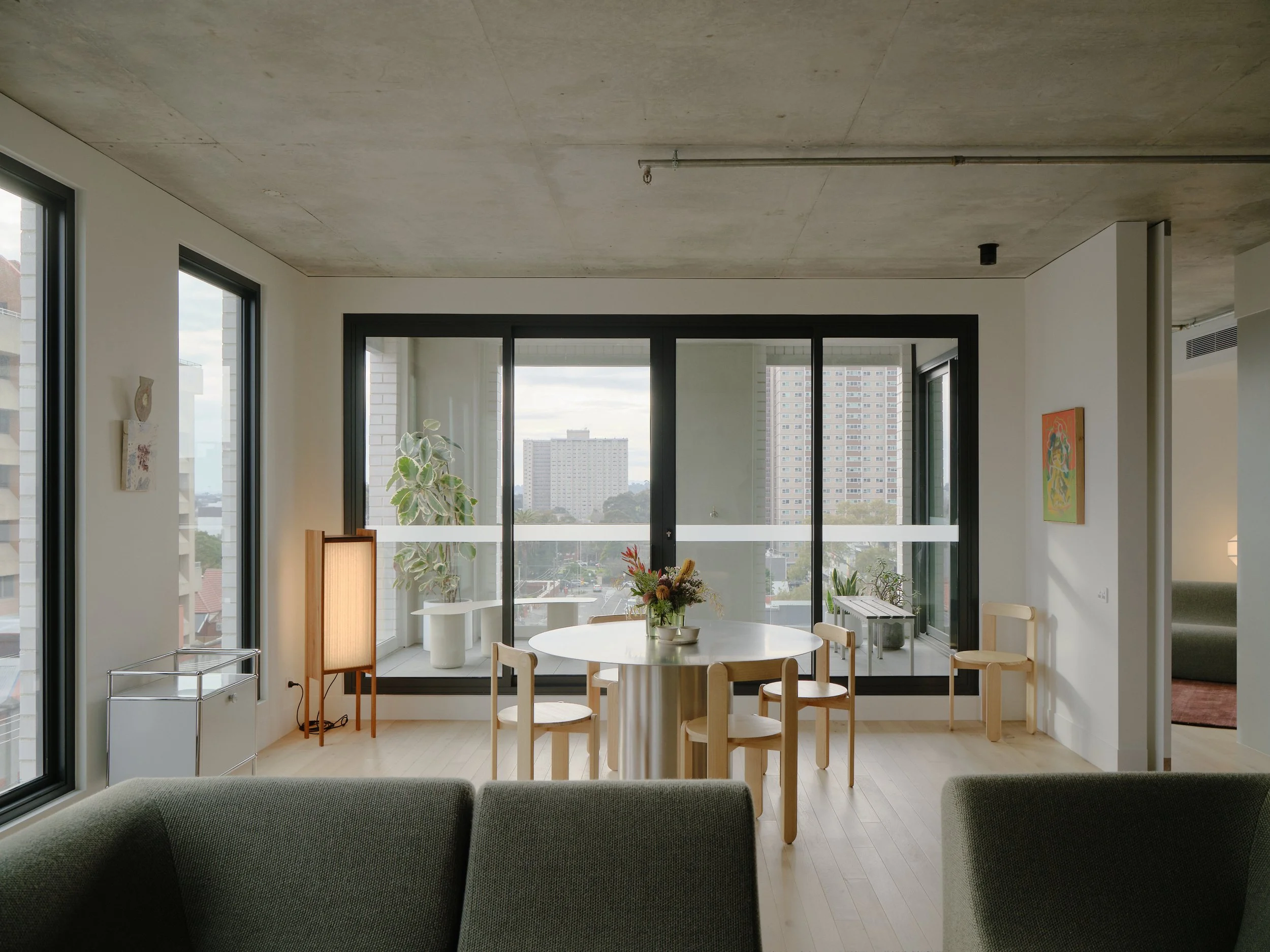
Otter Place Project
The cost of specifying joinery too late
The joinery specification process should begin during design development — not once your builder is already on site. When joinery is specified late, several things happen simultaneously and none of them are good.
Your builder is forced to tender on a vague scope, which means pricing comes back with wide contingencies or with key inclusions missing. Design intent gets diluted as decisions are made under programme pressure rather than with proper consideration. And your architect — who has a clear vision for how the joinery should look and perform — ends up in reactive mode rather than driving outcomes.
Engaging a joinery contractor during design development allows them to contribute meaningfully to the specification: advising on what's achievable in your timeline, what finishes perform well at scale, what details will cause installation problems, and where value can be engineered without compromising the design.
What to include in your joinery specification
A well-written joinery specification for an apartment development should cover the following:
Scope and schedule
Define clearly what falls within the joinery package. Typically this includes kitchen cabinetry (carcasses, doors, panels, and hardware), bathroom vanities, laundry joinery, built-in robes, and any feature or architectural joinery in common areas or individual apartments. Be explicit. Ambiguity in scope leads to disputes mid-programme.
Substrate and construction method
Specify the substrate — typically moisture-resistant particleboard or MDF, depending on location — and the construction method. European-style frameless (concealed hinge) construction is standard for contemporary apartment joinery, but your joinery contractor should be able to advise on what's appropriate for your project type and price point.
Finish and colour
Specify your finishes by product and reference number, not by description. "Light timber veneer" is not a specification. "Woodtone Natural Oak, Laminex, colour code XXXX" is. Vague finish descriptions lead to substitutions that may look similar in isolation but clash badly when installed across an entire floor.
Confirm whether your specified finishes are available in the volumes and lead times your programme requires. Some premium finishes have long lead times or minimum order quantities that can affect your programme if not identified early.
Hardware
Specify your hardware brand, range, and finish. For apartment joinery, soft-close hinges and drawer runners are standard. Handle style and finish should be consistent across the project and confirmed with your architect before procurement. Hardware is a detail that buyers notice and that drives perceived quality disproportionate to its cost.
Tolerances and quality standards
Define acceptable tolerances for gap lines, alignment, and finish consistency. In a multi-residential context, establishing this upfront — and having it agreed by your joinery contractor — gives you a clear basis for defect assessment at practical completion.
The offshore manufacturing question
A significant proportion of apartment joinery in Australia is manufactured offshore — predominantly in Vietnam, Malaysia, and China — and then shipped, delivered, and installed by local teams. When this model is properly managed, it delivers genuine value: manufacturing costs are lower, lead times can be competitive, and quality control at reputable factories is comparable to local production.
When it's poorly managed, it creates significant risk: quality variation between batches, lead times that blow out when shipping delays occur, and limited ability to manage defects or remakes quickly.
The key questions to ask any joinery contractor operating this model are: which factory do you use, have I seen samples from that factory, what quality control processes are in place at the factory level, and what is your process when a container arrives with defects?
A reputable contractor will answer all of these questions directly and be willing to provide sample boards and factory credentials.
Staging and programme integration
Apartment joinery doesn't arrive on site all at once. A well-structured joinery contractor will work with your builder to develop a staged delivery and installation schedule that aligns with your construction programme — floor by floor, or zone by zone — rather than delivering everything at once and creating a storage and handling problem on site.
Ask your contractor how they manage staging, what their minimum lead time for each stage is, and how they handle programme changes or delays. The answer tells you a great deal about their operational capability.
How Creador works with developers
Creador partners with developers from the design development phase through to practical completion and defect rectification. We bring a structured approach to joinery procurement that reduces risk, protects programme, and delivers a consistent, high-quality result across every apartment in the building.
We work directly with your architect and builder to develop the joinery specification, provide sample boards for design approval, manage offshore manufacturing with rigorous quality control, and coordinate staged delivery and installation with your construction programme.
Our goal is to make joinery the part of your project that runs smoothly — so your attention can be on the things that need it.

📩 Contact us to request a joinery proposal or explore our past projects.
Thank you for reading - Digital Marketing Team