
Architectural Joinery in Sydney: How to Deliver Design Intent at Scale
Joinery is one of the highest-value line items in any apartment development — and one of the most visible. It's what a buyer sees, touches, and judges the moment they walk into a display suite or take handover of their apartment. It shapes their perception of quality more than almost any other finish in the building.
Yet joinery is consistently one of the most under-specified and late-procured packages in the development cycle. Decisions get pushed to the construction phase, specifications remain vague at tender, and the consequences — cost blow-outs, programme delays, design inconsistency — land directly on the developer's bottom line.
This guide is written for property developers and project managers who want to get ahead of the most common joinery pitfalls and make better procurement decisions from the outset.
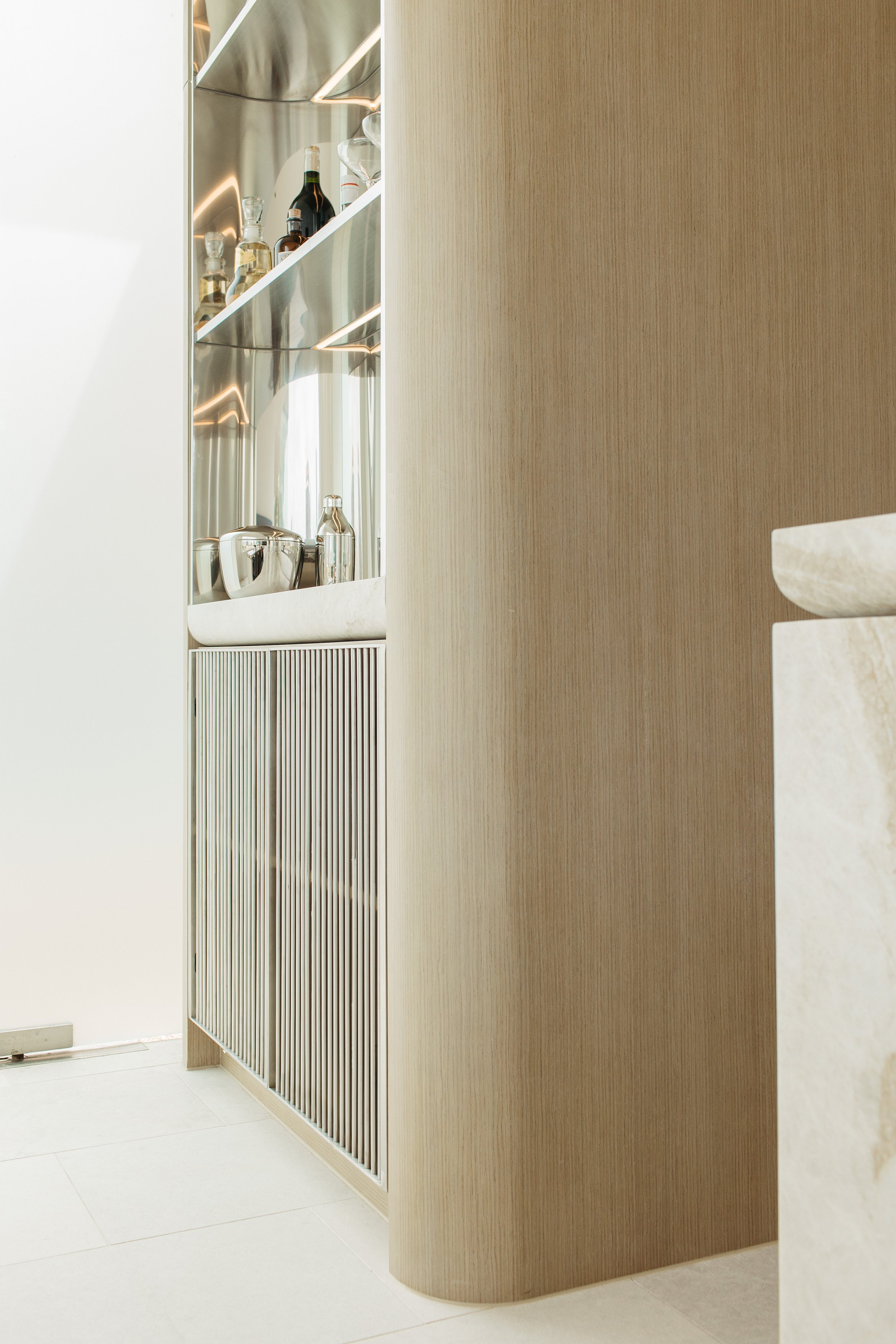
The Rushcutters Display
What "architectural joinery" actually means
The term gets used loosely in the construction industry, but architectural joinery refers specifically to joinery that is designed as an integrated part of the building's architecture — not simply functional cabinetry that happens to be installed in a room.
Architectural joinery is characterised by its relationship to the surrounding space. Cabinetry that runs floor to ceiling and wraps a corner without visible joins. A kitchen island that reads as a piece of furniture, not a box. A bathroom vanity that is recessed into a niche, with lighting integrated above. Joinery that meets walls, ceilings, and floors with the precision of a built element, not an afterthought.
Delivering this in a single custom home is demanding. Delivering it consistently across 80 or 120 apartments in a Sydney development requires a very different kind of contractor.
Why design intent gets lost — and how to prevent it
Design intent is most commonly lost during the transition from concept design to shop drawings. This is the phase where the architect's vision — expressed in rendered elevations and schematic details — is translated into the precise manufacturing drawings from which the joinery will actually be built.
If the joinery contractor's shop drawing team doesn't have a strong understanding of design intent — or if the review process between architect and contractor is poorly managed — small compromises accumulate. A shadow line detail gets simplified. A panel thickness changes. A finish is substituted. Individually, each change may seem minor. Collectively, they produce joinery that looks like a budget version of what was designed.
The solution is to engage your joinery contractor early — during design development, not at tender — and to establish a rigorous shop drawing review process from the outset. The architect should be reviewing and approving shop drawings for every joinery type before manufacturing commences. And the contractor should be proactively raising constructability questions rather than making unilateral decisions on site.
The Sydney residential market: what's driving joinery design in 2026
Sydney's premium residential market continues to be shaped by a number of converging design trends that place significant demands on joinery contractors.
Integrated appliances and handleless joinery have become the default specification in projects above a certain price point — they require tighter tolerances and more complex installation than traditional door and drawer configurations. Fluted and reeded panels are appearing across kitchens, bathrooms, and feature walls, requiring specialist machining and careful finish matching. Natural materials — stone veneer, real timber veneer, brushed metal inlays — are increasingly specified in place of laminates, requiring contractors with the manufacturing capability and quality control to handle them at scale.
In the bathroom, the shift toward floating vanities with integrated basin and slim profile drawer boxes continues — a detail that looks simple in a render but requires precision engineering and careful installation to execute without visible fixing points or poor alignment.
A Sydney joinery contractor operating in the premium residential space needs to be across all of these trends — not as aesthetic preferences, but as technical challenges to be solved.
What to look for in an architectural joinery partner in Sydney
When selecting a joinery contractor for a design-driven Sydney development, architects and project managers should look for demonstrated experience in design collaboration — not just manufacturing capability. Ask to see their shop drawing examples. Ask how they manage design review with architects. Ask for examples of projects where they navigated a complex detail or a difficult installation condition.
Look for a contractor who communicates proactively and who treats the architect's design intent as a fixed point, not a negotiating position.
Creador's approach to architectural joinery in Sydney
Creador works closely with Sydney's leading architects and developers to deliver joinery that honours the design intent — from the first shop drawing to the final installation. Our team is structured around design collaboration: we engage early, we ask the right questions, and we bring our manufacturing and installation expertise into the design process rather than arriving after decisions have been made.
With operations in Sydney backed by our advanced manufacturing network and precision installation teams, we have delivered architectural joinery across a range of Sydney's most design-driven residential developments.
If you're working on a Sydney project and want to discuss how we approach architectural joinery from specification to handover, we'd love to hear from you.

📩 Contact us to request a joinery proposal or explore our past projects.
Thank you for reading - Digital Marketing Team